
California Sweepstakes Casino Ban 2026: What Players Need to Know
 Available in US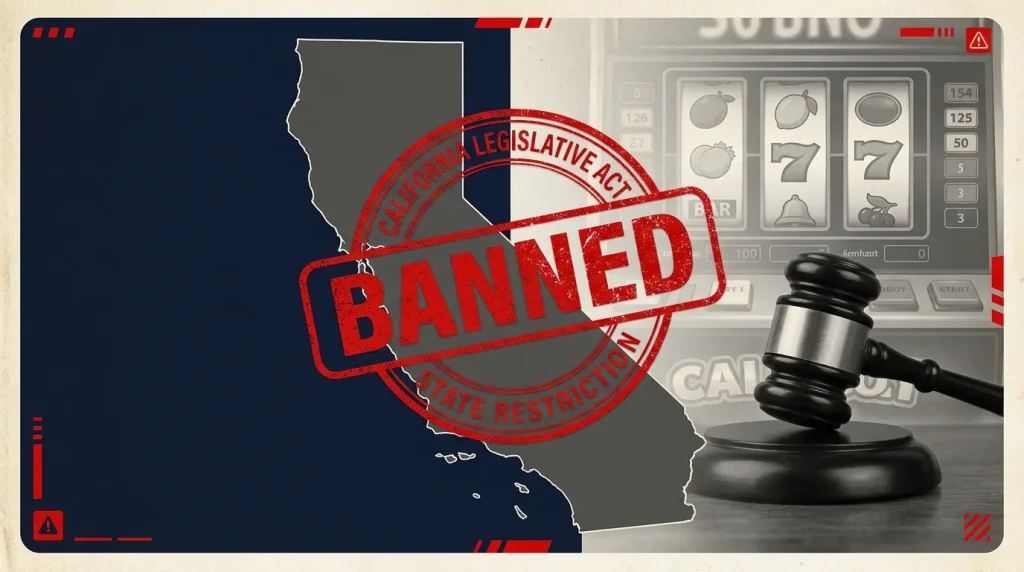
Contents
California represented the largest single market for sweepstakes casinos in the United States. The state’s combination of massive population, tech-savvy residents, and lack of legal online gambling alternatives made it a perfect environment for sweepstakes gaming to flourish. That era has ended.
Legislation signed into law in 2026 effectively bans sweepstakes casinos from operating in California beginning January 1, 2026. The move follows a pattern seen in other states where regulators decided that the sweepstakes model looked too much like gambling to remain unregulated.
This guide explains what happened, how the ban affects the market, and what options remain for California residents who enjoyed sweepstakes casino gaming. If you’re a CA player trying to understand your rights and alternatives, here’s what you need to know.
AB 831 Explained
Assembly Bill 831 targets the dual-currency model that defines sweepstakes casinos. The legislation specifically addresses platforms that sell virtual currency packages with bonus currencies redeemable for prizes—the exact structure used by all sweepstakes casinos.
The bill’s language closes the legal gap that sweepstakes casinos operated within. Previously, these platforms argued they weren’t gambling because players could obtain prize-eligible currency without purchase through AMOE and other free methods. California legislators disagreed, determining that the practical reality of these platforms constituted gambling regardless of technical legal arguments.
Bill Miller, CEO of the American Gaming Association, has been vocal about the sweepstakes casino industry’s approach to regulations. Speaking at G2E 2026, he characterized operators as having “a word to describe what it means to ignore the rules, bypass the citizens, offer no community benefits and tell customers it’s okay to lose your shirt. They call it innovation. I call it something else. It’s greedy, it’s reckless and it’s irresponsible.” This perspective from the traditional gambling industry’s leading advocate reflects tensions between licensed operators and sweepstakes platforms.
Enforcement mechanisms give the legislation teeth. Platforms that continue operating in California face potential penalties, and payment processors are pressured to decline transactions from California residents to covered platforms. The combination of legal liability and financial infrastructure pressure makes compliance practical even without aggressive prosecution.
Tribal gaming interests played a significant role in pushing the legislation. California’s tribal casinos saw sweepstakes platforms as competitors siphoning potential customers without contributing to tribal economies or state revenues. Their political influence helped move the bill through the legislature.
Market Impact
California’s exit from the sweepstakes casino market carries substantial financial implications. According to data from Eilers & Krejcik Gaming compiled for the Social and Competitive Gaming Leadership Association, California accounts for 17.3% of the US sweepstakes market, representing approximately $2.42 billion in gross revenue.
The economic footprint extends beyond direct platform revenue. The same analysis estimates California’s sweepstakes gaming activity generates $802 million in direct economic impact and $208 million in indirect economic activity annually. Job losses, reduced spending in adjacent industries, and lost tax potential all follow from the ban.
For sweepstakes casino operators, losing California means restructuring their entire business model. Platforms that derived significant revenue from the state must find growth elsewhere or accept permanent revenue reduction. Marketing strategies built around California’s population density require complete revision.
Players in California face immediate practical impacts. Accounts will be restricted, balances will need to be redeemed before deadlines, and the entertainment option these platforms provided disappears. For casual players who enjoyed occasional sweepstakes gaming, alternatives are limited.
The industry-wide effect may accelerate consolidation. Smaller platforms with heavy California exposure may not survive the revenue loss. Larger operators can absorb the hit but will look to other markets for growth, potentially increasing competitive pressure in states where sweepstakes casinos remain legal.
Timeline of Events
California’s path to banning sweepstakes casinos developed over several years of increasing regulatory attention.
Early concerns emerged as sweepstakes casino adoption grew rapidly in the state during 2021 and 2022. Consumer complaints, media coverage of the industry, and tribal casino lobbying brought the issue to legislative attention.
2023 saw initial legislative proposals that didn’t advance. Early bills faced opposition from sweepstakes operators and questions about constitutionality. The sweepstakes industry argued that their model was legally distinct from gambling and protected under promotional sweepstakes law.
In 2026, revised legislation addressed constitutional concerns while maintaining the core prohibition. AB 831 moved through committee hearings with testimony from tribal gaming representatives, consumer advocates, and platform operators. The bill passed both chambers with bipartisan support.
Governor’s signature in late 2026 set the January 1, 2026 effective date, giving platforms and players time to prepare for the transition. The delay also allowed for potential legal challenges, though none have successfully blocked implementation.
Throughout 2026, sweepstakes casinos communicated with California players about upcoming restrictions. Platforms encouraged redemptions, adjusted marketing to other states, and prepared for the operational changes required to block California access.
Alternatives for CA Players
California residents who enjoyed sweepstakes casino gaming have limited but real alternatives after the ban takes effect.
Tribal casinos remain fully legal and offer comprehensive gaming options including slots and table games. California hosts more tribal casinos than any other state, with facilities distributed across the geography. The in-person experience differs from online play, but the gaming itself is available.
Social casinos that don’t offer prize redemption continue operating legally. Platforms like Big Fish Casino and Slotomania let you play slot-style games for entertainment without the possibility of cashing out winnings. For players who enjoyed the gameplay itself more than the prize potential, social casinos provide similar experiences.
Horse racing betting is legal in California both at tracks and through licensed online platforms. If you’re seeking legal online gambling options, horse racing represents one of the few available categories.
Daily fantasy sports operate legally in California through platforms like DraftKings and FanDuel. While not casino gaming, DFS offers competition-based prize opportunities that might appeal to players seeking online entertainment with real stakes.
The possibility of future iGaming legalization exists but faces substantial obstacles. Tribal gaming interests, cardroom operators, and potential ballot initiative requirements create a complex political environment. Regulated online casino gaming could eventually come to California, but no clear timeline exists.
Traveling to neighboring states with legal sweepstakes or iGaming access remains an option for dedicated players. Nevada offers extensive casino gaming, though online sweepstakes status varies. This approach involves significant effort for casual entertainment. The nationwide status is on the legal states map.
Navigating the New Reality
California’s sweepstakes casino ban removes the largest single market from the industry. AB 831 closes the legal framework that platforms relied upon, ending access for millions of players who used these services for entertainment. The $2.42 billion market and over $1 billion in economic impact disappear from the sweepstakes ecosystem.
Know your rights as a California player: redeem any balances before restrictions take effect, understand that continued play through VPNs or other circumvention carries risks, and explore legal alternatives including tribal casinos and social gaming. The sweepstakes casino experience you knew in California is ending, but entertainment options—different ones—remain available within the law. The wider context is in our sweepstakes casino slots guide.