New York Sweepstakes Casino Ban: AG Crackdown and S5935 Explained
 Available in US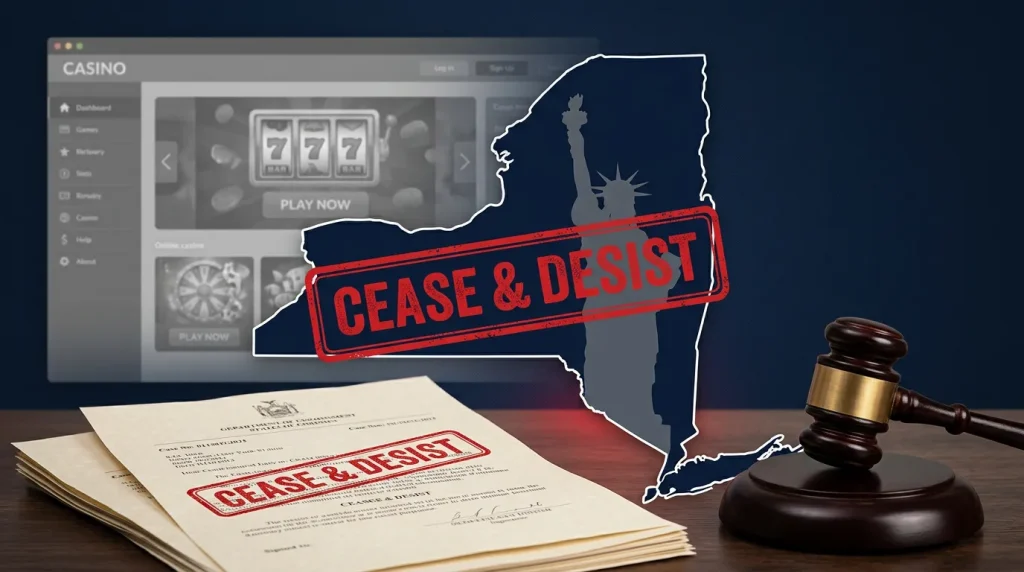
Contents
New York moved aggressively against sweepstakes casinos, with Attorney General Letitia James leading enforcement actions that reshaped the market. The combination of cease-and-desist letters to major platforms and new legislation under S5935 created an enforcement reality that effectively bans sweepstakes gaming for New York residents.
The state’s approach differs from California’s legislative path. New York regulators took action under existing gambling laws, arguing that sweepstakes casinos already violated state statutes. The subsequent legislation formalized and strengthened these enforcement powers with explicit penalties.
This guide explains what happened in New York, how S5935 affects platforms and players, and what options remain for New York residents. Understanding the enforcement reality helps you navigate the changed landscape.
AG Enforcement Actions
Attorney General Letitia James announced enforcement actions against sweepstakes casinos in early 2026, sending cease-and-desist letters to 26 platforms operating in New York. The letters demanded immediate cessation of services to New York residents, citing violations of state gambling laws.
The legal theory behind these actions interpreted sweepstakes casinos as illegal gambling operations regardless of the dual-currency structure. New York prosecutors argued that the ability to redeem Sweeps Coins for cash prizes constituted gambling under state law, and the “no purchase necessary” alternative did not create a valid sweepstakes exemption. This interpretation rejected the promotional sweepstakes defense that platforms had relied upon for years of operation.
Platform responses varied significantly in speed and approach. Major operators implemented geoblocking for New York IP addresses within weeks of receiving letters. Smaller platforms delayed compliance or disputed the legal interpretation, though continued operation created increasing legal exposure. The compliance window specified in the letters gave operators limited time to respond before facing escalated enforcement.
The New York State Gaming Commission supported the Attorney General’s position with public statements and regulatory coordination. Chairman Brian O’Dwyer publicly backed enforcement, stating that “these so-called ‘sweepstakes’ games are unscrupulous, unsecure, and unlawful.” This coordination between the Attorney General’s office and the Gaming Commission strengthened the state’s legal position against potential challenges from operators.
Civil and potentially criminal consequences face platforms that ignore cease-and-desist demands. The Attorney General’s office indicated willingness to pursue further legal action against non-compliant operators, creating strong incentives for platforms to block New York access rather than risk extended litigation. The enforcement actions sent a clear message to the broader sweepstakes industry about New York’s regulatory stance.
S5935 Bill Details
Senate Bill 5935 codified sweepstakes casino restrictions into New York law, removing any ambiguity about the legal status of these platforms. The bill passed with bipartisan support and established explicit penalties for operators serving New York residents.
The legislation defines prohibited activity to include any online gaming platform using virtual currencies that can be converted to cash prizes. This definition specifically targets the Gold Coins/Sweeps Coins model that sweepstakes casinos rely on, regardless of whether free entry methods exist.
Penalties under S5935 range from $10,000 to $100,000 per violation. The broad definition of “violation” means each transaction with a New York resident could theoretically constitute a separate offense, creating enormous potential liability for non-compliant platforms. These penalty amounts provide significant deterrent even for well-funded operators.
The bill also grants enhanced enforcement powers to state agencies. Regulators can now demand records from payment processors, require ISPs to block access to prohibited sites, and coordinate with federal authorities on interstate enforcement. These tools strengthen New York’s ability to enforce restrictions against platforms operating from other jurisdictions.
Consumer protection provisions in S5935 specify that New York residents cannot be held criminally liable for accessing sweepstakes casinos. The legislation targets operators rather than players, though terms of service violations and potential fraud implications remain relevant considerations for individuals attempting to circumvent restrictions.
Industry-Wide Compliance
Every major sweepstakes casino has either voluntarily blocked New York access or faces direct enforcement action. The scope of affected platforms encompasses virtually the entire industry.
Major operators implemented New York restrictions promptly following the Attorney General’s announcement. Platform compliance reflects a broader strategy of maintaining access in favorable jurisdictions rather than fighting losing legal battles in hostile states.
Both large and small platforms blocked New York residents within the compliance window specified in cease-and-desist letters. These platforms continue operating in other states while acknowledging New York’s authority to regulate within its borders.
Established operators with extensive experience running sweepstakes platforms restricted New York access as well. Their compliance signals industry-wide recognition that New York enforcement poses serious legal risk.
Newer entrants followed similar patterns. The consistency of platform responses demonstrates that operators view New York enforcement as credible and consequential rather than mere posturing.
Some offshore operators continue claiming to serve New York residents, but these platforms operate outside mainstream industry norms and may pose risks beyond legal compliance—including payment reliability and fair gaming concerns.
Player Implications
New York residents lost access to sweepstakes casinos through a combination of platform geoblocking and legal restrictions. Understanding what this means practically helps affected players make informed decisions about their options going forward.
Existing account balances remain a concern for players who held Sweeps Coins when restrictions took effect. Most platforms provided windows for New York residents to redeem remaining balances before blocking access. Players who missed these windows may need to contact customer support for resolution, though outcomes vary by platform and individual circumstances.
Accessing blocked platforms through VPNs or false residency information violates platform terms of service and potentially state fraud laws. Even if access succeeds temporarily, redemption attempts would require identity verification that exposes the deception. This approach carries risks without reliable upside, as platforms actively work to detect and block circumvention attempts.
Legal alternatives for New York residents include the state’s regulated online sports betting market, tribal casinos, and traditional lottery products. Real money online casinos remain unavailable in New York, though legislative discussions about iGaming legalization continue with varying levels of momentum. The state lottery provides scratch-offs, draw games, and Quick Draw that offer legal gaming entertainment within existing regulatory frameworks.
The practical reality is that sweepstakes casinos are effectively unavailable to New York residents for the foreseeable future. Platforms that could theoretically be accessed have strong incentives to detect and block New York users to avoid regulatory penalties. The enforcement reality created by AG James and S5935 has meaningfully changed what gaming options exist for players in the state. Those seeking online casino-style gaming must wait for potential iGaming legalization or travel to neighboring states with different regulatory approaches. The nationwide status is on the legal states map.
The New York Enforcement Reality
New York’s sweepstakes casino crackdown combined aggressive Attorney General enforcement with legislative action under S5935. The 26 cease-and-desist letters signaled serious intent, and penalties up to $100,000 per violation gave platforms compelling reasons to comply.
The enforcement reality is clear: sweepstakes casinos are not legally available to New York residents, and attempting to circumvent restrictions creates risks without reliable rewards. Players affected by these changes must look to other entertainment options while monitoring whether future legislative changes might alter the landscape. The wider context is in our sweepstakes casino slots guide.